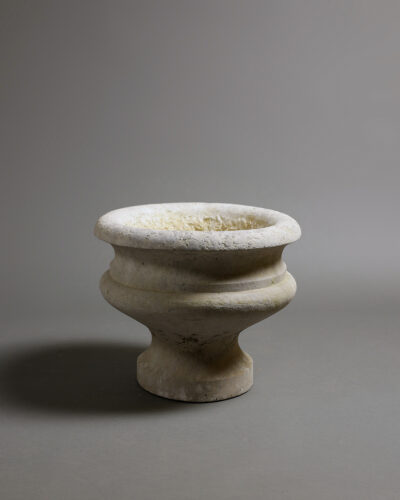
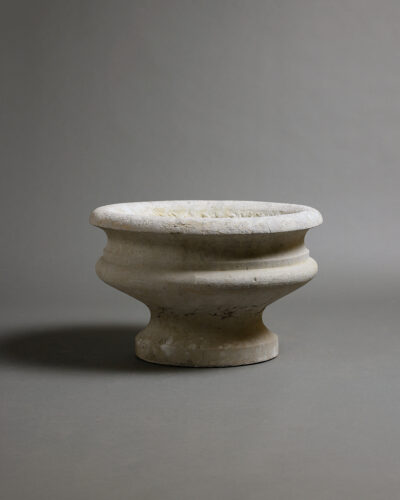
A Pair of Early C18th Marble Cisterns
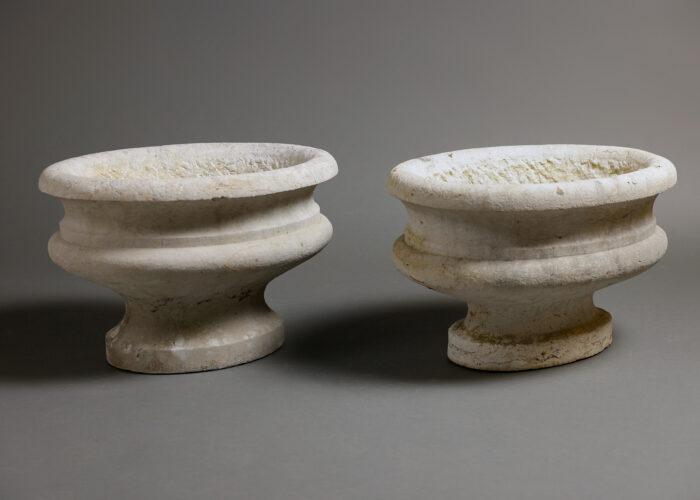
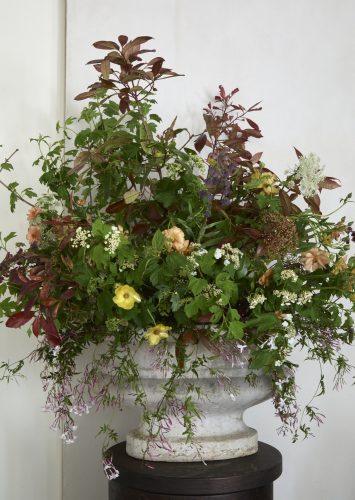
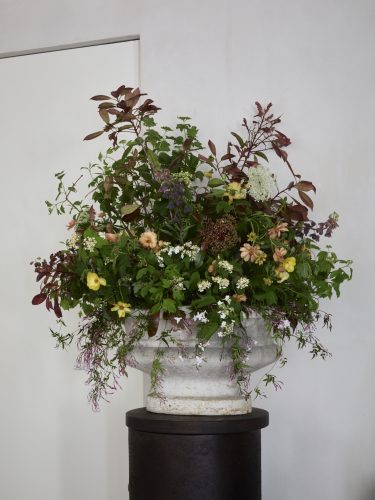
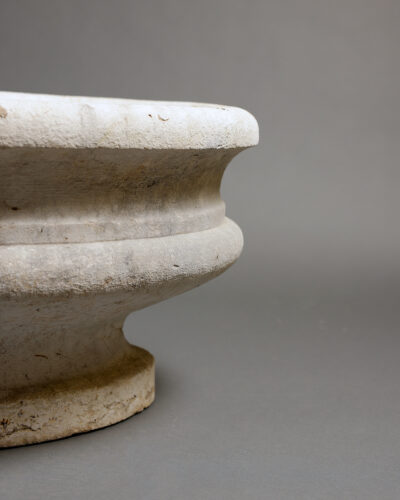
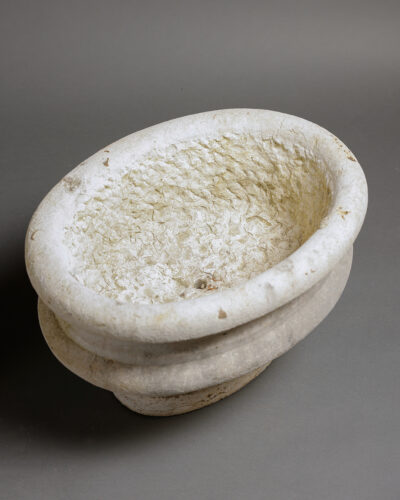
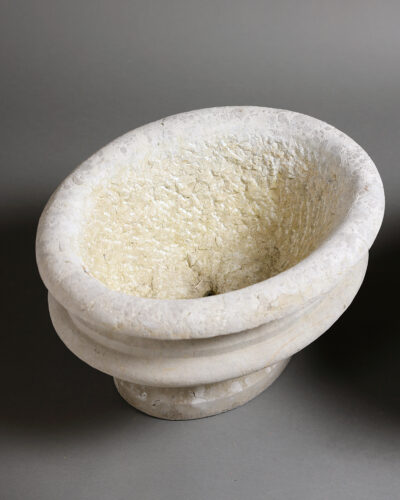
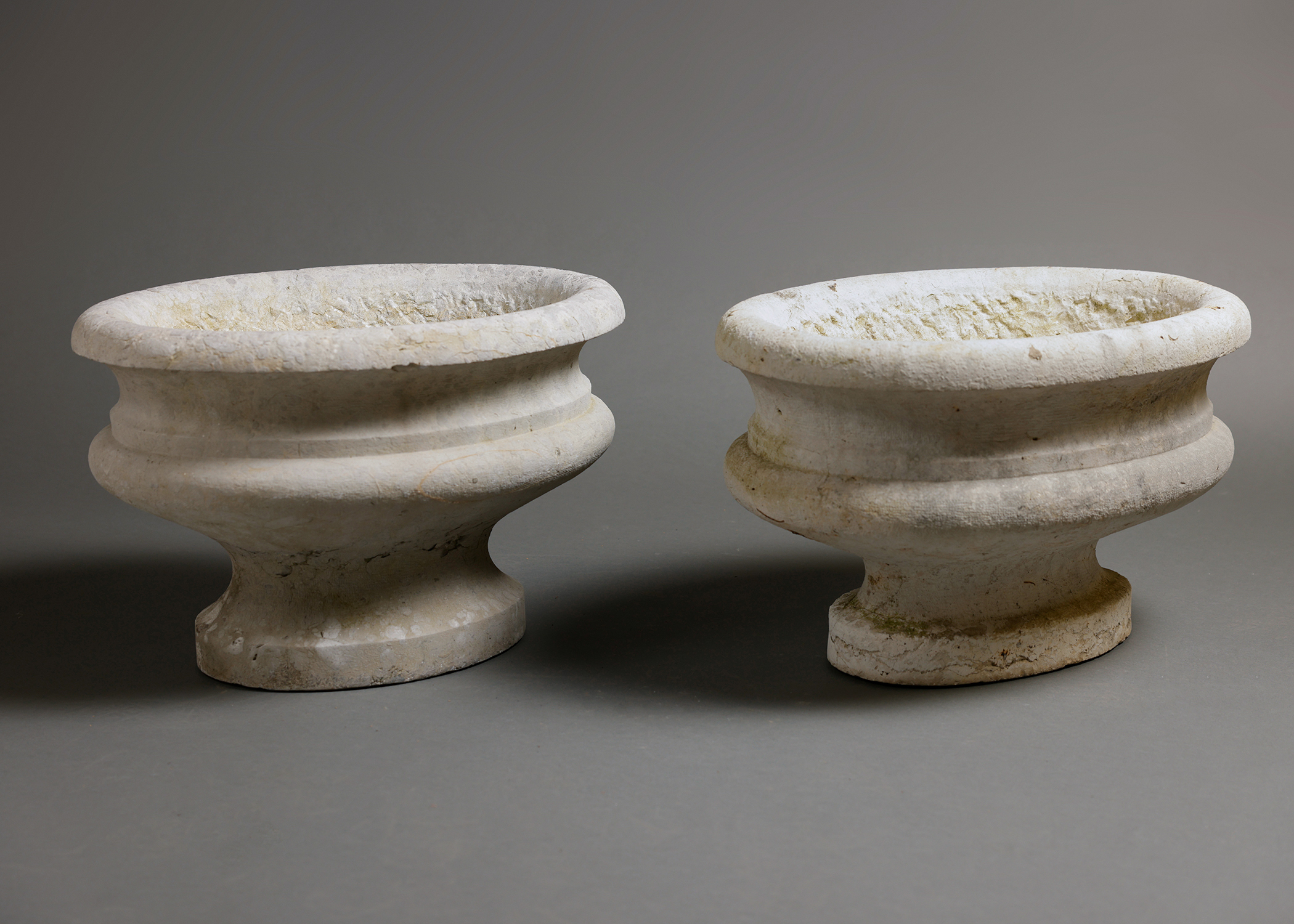
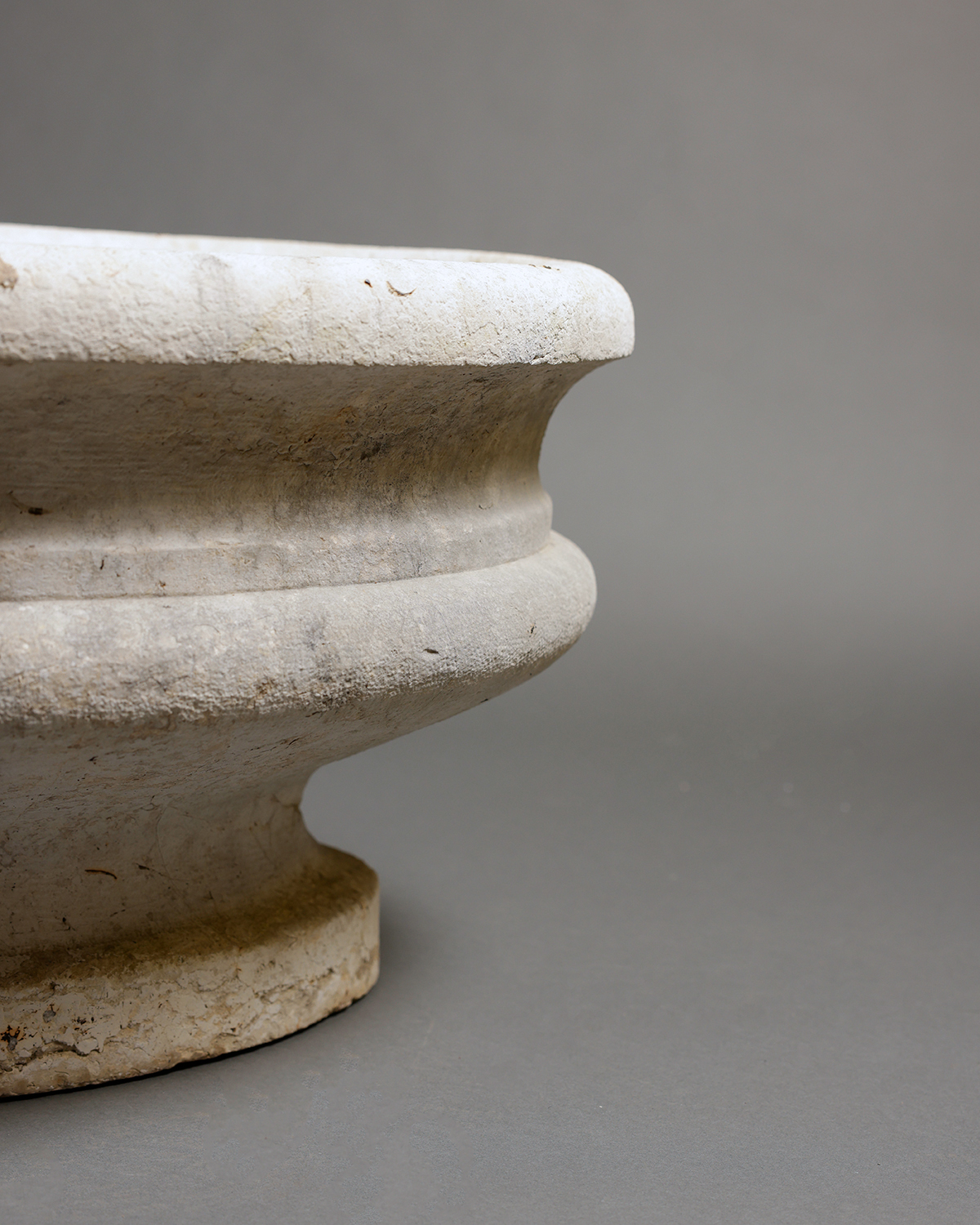
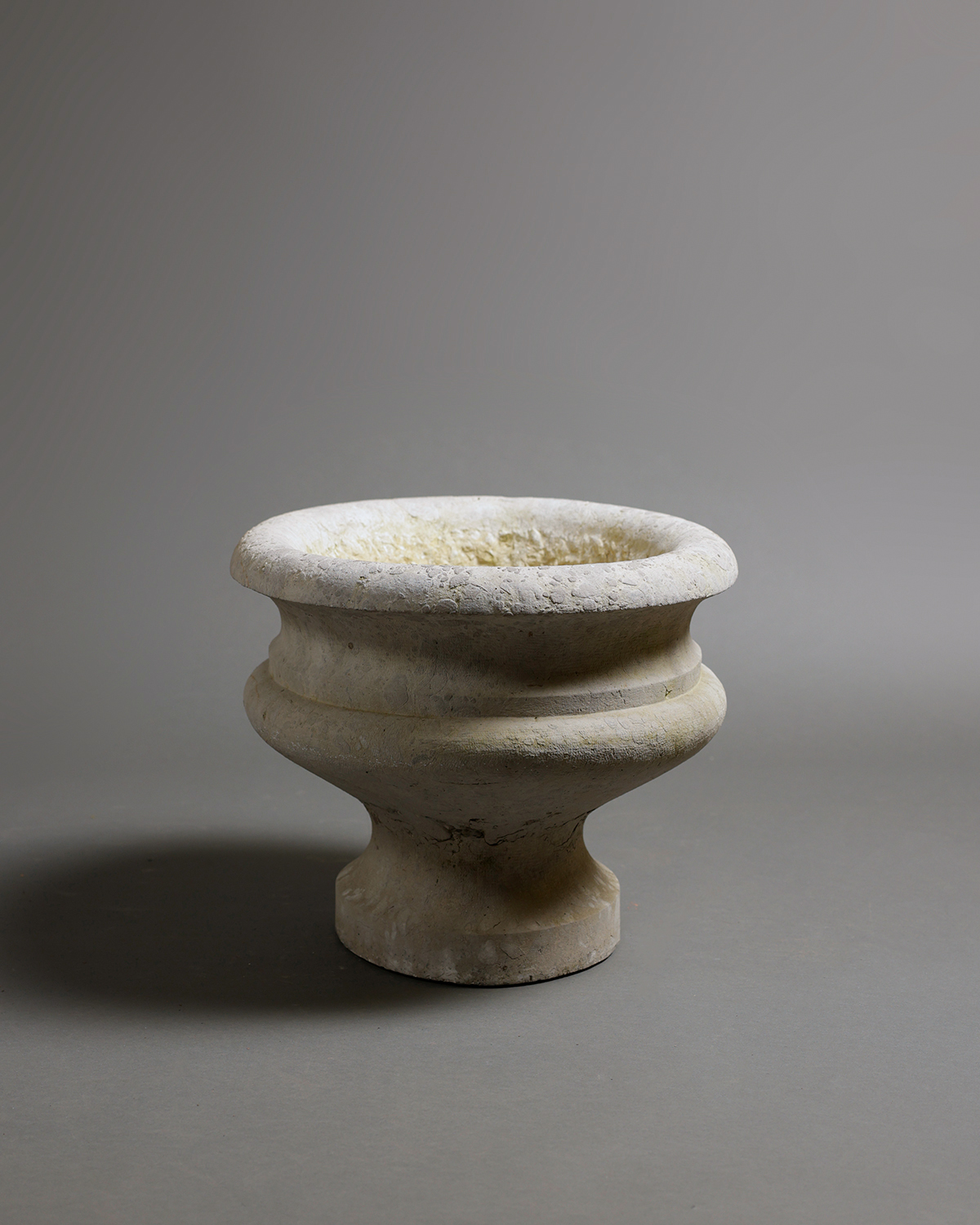
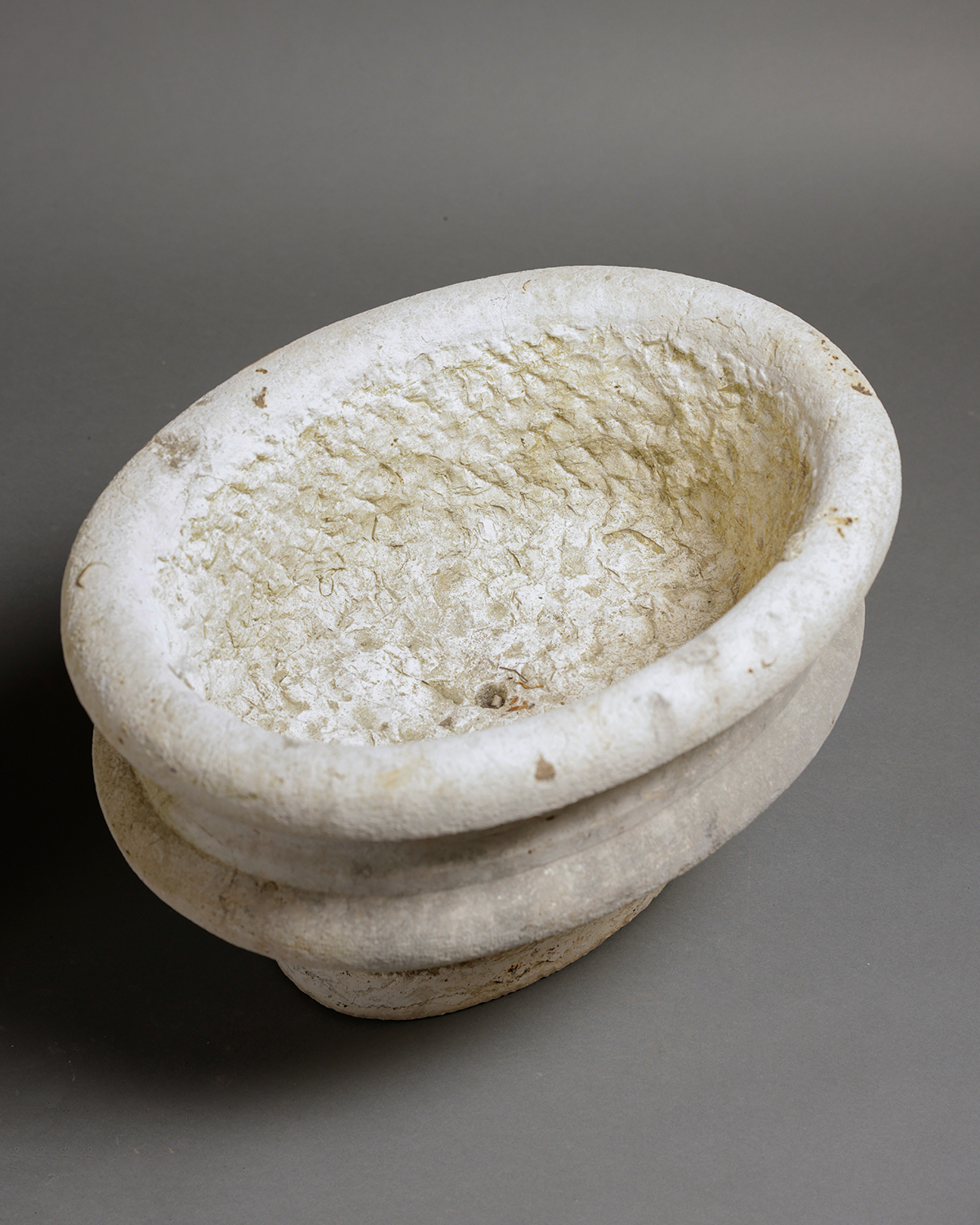
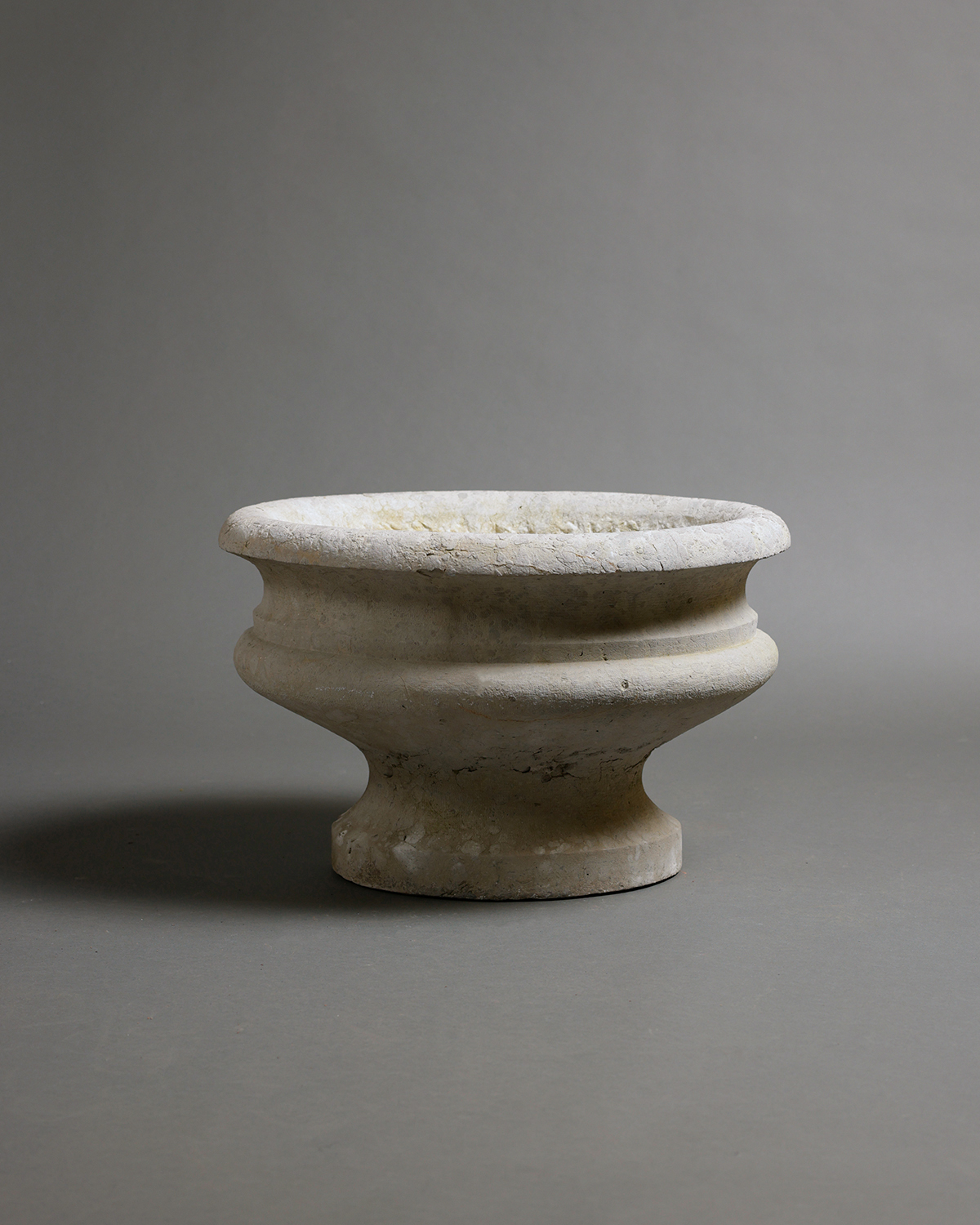
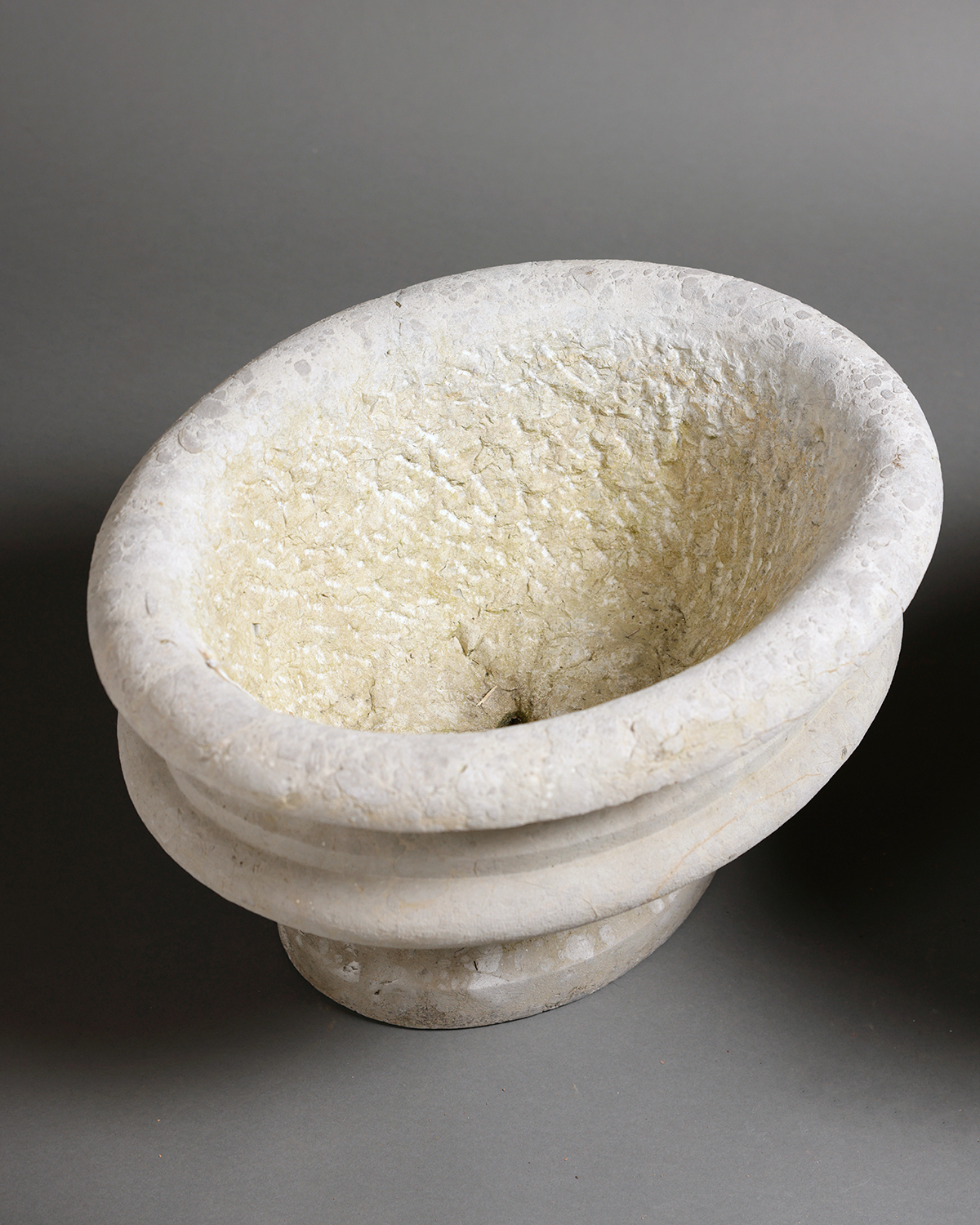
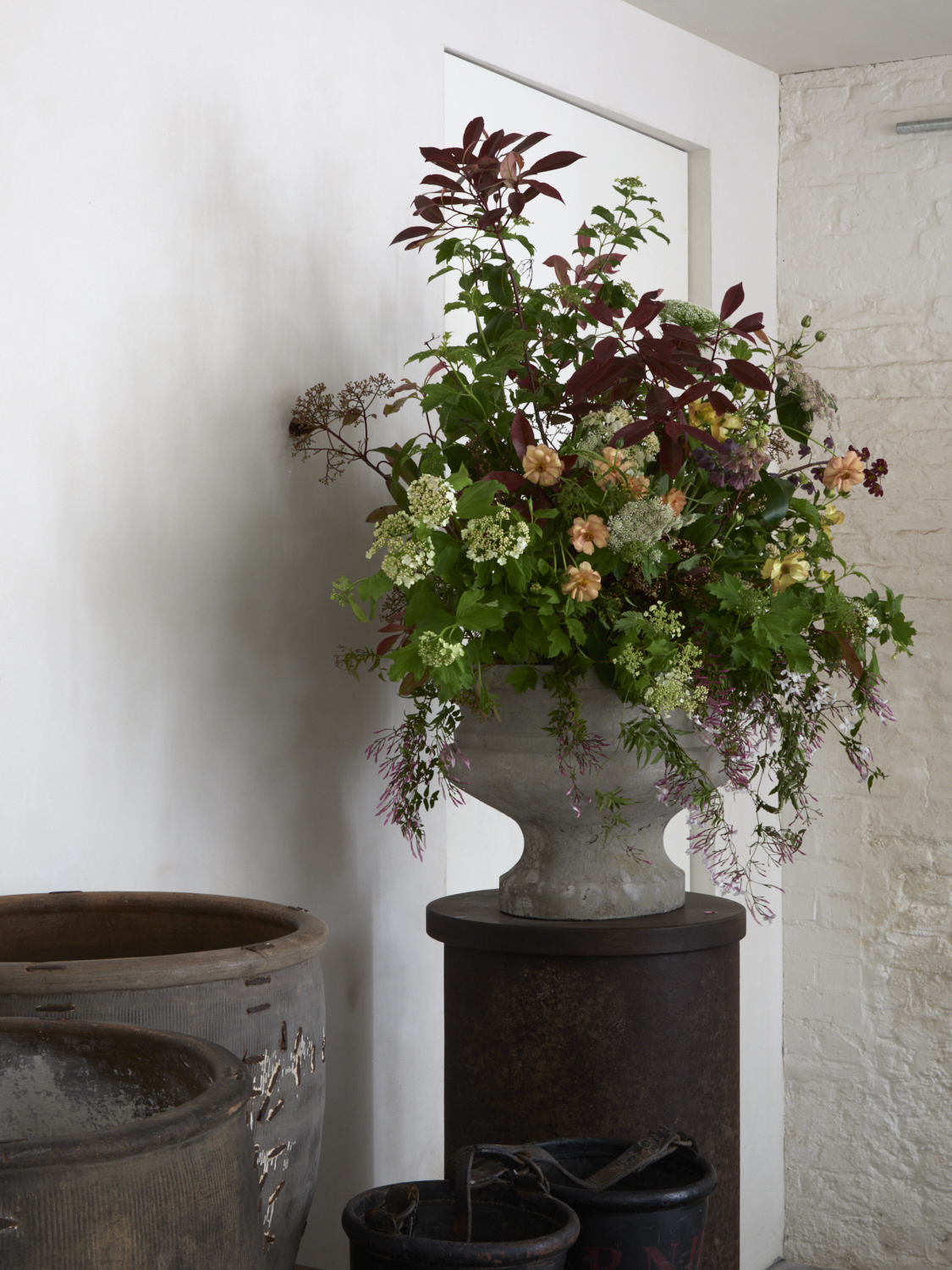
A pair of early 18th century marble cisterns, probably from Northern Italy, each of robust circular form, the thick rim above a bold torus moulding and waisted socle, raised on a spreading circular foot, the interiors bearing evidence of water use and weathering. Carved in a pale white marble with a softly aged surface and natural patination throughout.
This striking pair of marble cisterns exemplifies the enduring influence of classical Roman forms as interpreted through the Italian Baroque and early Palladian tradition. The pronounced torus beneath the rim and the compact, waisted base reflect a vocabulary closely associated with late 17th and early 18th century Italian stone carving, where utilitarian objects, such as wellheads and cistern basins, were conceived with the same formal architectural elements.
Marble cisterns and wellheads of related form were produced throughout northern Italy, particularly in regions such as Veneto and Lombardy, and were subsequently exported by English patrons during the 18th century, reflecting the broader influence of Italian models on English landscape design.
The bold, unadorned silhouette of the present examples finds resonance with the architectural language promoted in England by figures such as John Vanbrugh, notably at Castle Howard, where similarly weighty classical forms were employed in garden and architectural ornament.
Dimensions
Max Width: 610mm / 24"Max Depth: 450mm / 17¾"
Max Height: 470mm / 18½"